
That Sunday evening feeling? Let’s talk about it
Sunday Anxiety Is a Pattern, Not a Personal Flaw
For many people, Sunday evening brings a familiar shift: tension in the body, racing thoughts, irritability, or a sense of heaviness that seems to arrive “out of nowhere.” This experience—often called the Sunday Scaries—is easy to dismiss as overreaction or poor coping.
Clinically, that interpretation misses the point.
Sunday anxiety is not a failure of resilience or insight. It is a predictable response to transition, anticipation, and accumulated pressure. When we understand how these elements interact, we can respond in ways that are both compassionate and effective.
That is why I wanted to share with you today how to reduce "Sunday scaries" with techniques grounded in psychological research—without jargon, and without pretending that anxiety can simply be “thought away...”
What Is Actually Happening on Sundays
Sunday Scaries rarely come from the work itself. They come from anticipation.
As the weekend ends, the mind begins to simulate the coming week: conversations, responsibilities, expectations, unfinished tasks.These simulations are usually vague and global rather than specific—and that lack of clarity is exactly what keeps the nervous system activated.
At the same time, Sunday marks a shift in roles. The flexibility and autonomy of the weekend gives way to structure, obligation, and evaluation. Even when work is meaningful, this transition carries emotional weight.
For example, someone reports feeling calm and engaged all weekend, only to become anxious late Sunday afternoon—despite no change in Monday’s workload. The distress is not about capacity; it’s about the shift.
What you can do instead 👇🏻
The goal of these strategies is not to eliminate anxiety, but to reduce unnecessary activation and increase a sense of agency.
1. Get Thoughts Out of Your Head and Onto Paper
When worries stay internal, they tend to blur together and feel endless.
A short, intentional planning window on Sunday can help:
Write down what Monday actually involves
Identify the first small step for each task
Note what does not need attention yet
Once written, close the notebook or document. This matters. It signals completion.
Why it helps:
Clarity reduces cognitive load. Your brain no longer has to hold everything at once.
2. Aim for Clarity, Not Early Productivity
Many people try to soothe Sunday anxiety by working ahead. This often backfires.
What usually helps more is:
Reviewing expectations
Checking schedules
Clarifying priorities
Avoid turning Sunday into a “soft workday.” Preparation is most effective when it is brief and contained.
3. Pay Attention to What Monday Represents
Sometimes Sunday Scaries are less about tasks and more about meaning.
Questions worth asking:
Is there a specific interaction I’m dreading?
Do I feel pressure to perform, prove, or manage others’ emotions?
Am I stepping back into a role that feels restrictive?
Anxiety often points to relational or contextual strain, not incapability.
4. Stop Arguing With the Anxiety
Trying to convince yourself that you “shouldn’t feel this way” tends to intensify distress.
A more effective approach is to notice what’s happening without fighting it:
“I’m noticing a spike in anxiety as the weekend ends.”
“My body is reacting to the upcoming transition.”
This shift—from judgment to observation—often reduces intensity on its own.
5. Treat Thoughts as Events, Not Facts
On Sundays, the mind is particularly good at making predictions that feel absolute:
“This week will be overwhelming.”
“I won’t cope.”
Instead of debating these thoughts, try stepping back from them:
Notice the thought
Name it
Let it pass without engaging
Distance creates flexibility.
6. Design Sunday Evening Intentionally
Environment matters more than we think.
Helpful adjustments include:
Softer lighting after sunset
Avoiding work-related screens or spaces
Repeating a consistent “closing” ritual (music, tea, shower)
These cues tell the nervous system that it’s safe to slow down.
7. Look for Repeating Patterns, Not Isolated Episodes
If Sunday anxiety shows up most weeks, it’s worth noticing patterns:
Does it worsen during certain projects?
Does it spike after particular interactions?
Does it improve during time off?
Patterns offer information. They point toward what needs attention or change.
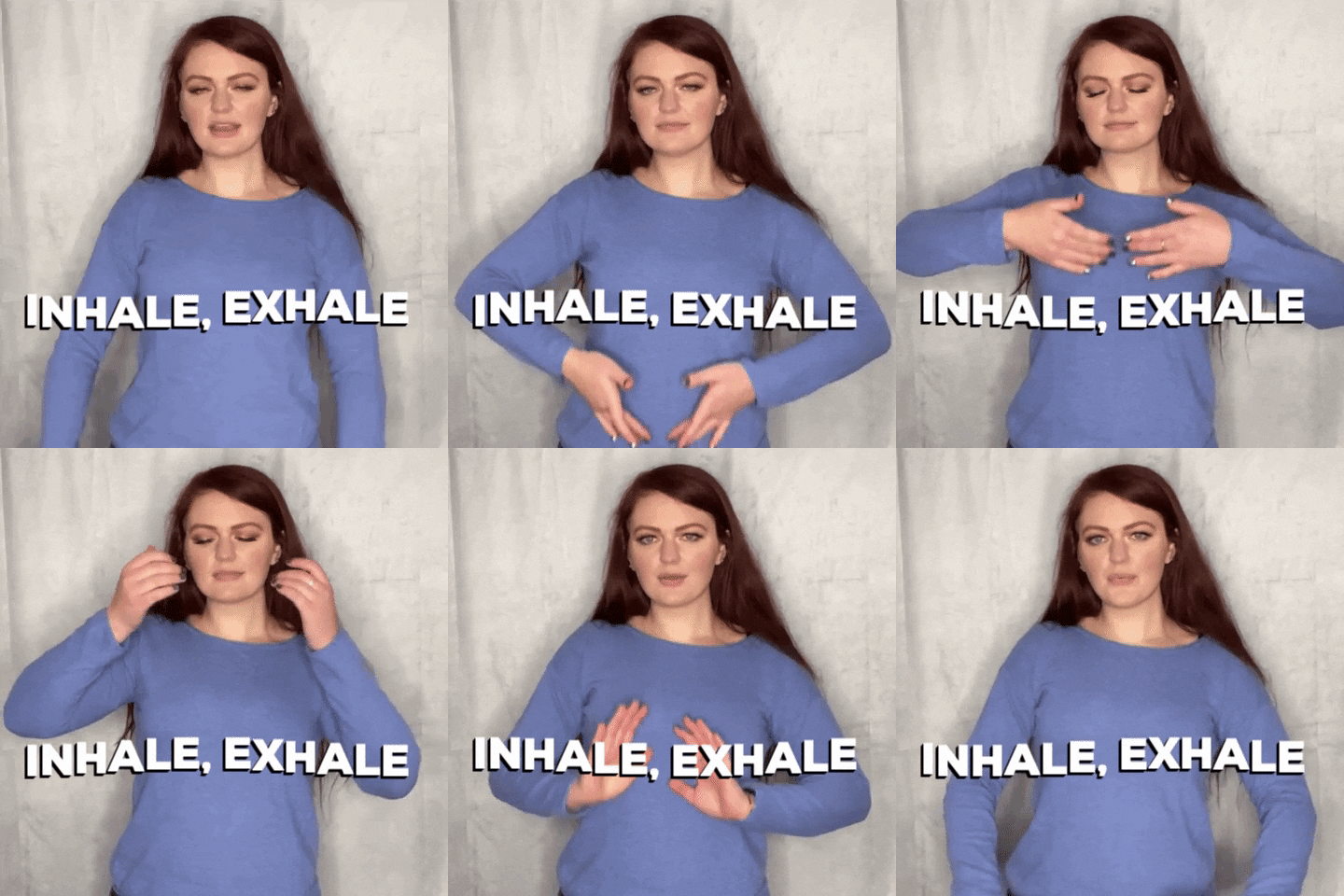
8. Work With the Body, Not Just the Mind
When anxiety is already high, reasoning alone is rarely enough.
Simple physiological supports can help:
Slowing the breath
Gentle movement
Warmth or comfort cues
Once the body settles, the mind usually follows.
9. Keep Sundays Intact
One of the strongest contributors to Sunday Scaries is blurred boundaries.
If work seeps into the entire day—emails, mental rehearsing, “just checking”—the nervous system never fully recovers.
If preparation is necessary, do it once and intentionally. Otherwise, protect Sunday as a recovery space, not a waiting room for Monday.
Frequently Asked Questions (FAQs)
1. Are Sunday Scaries a sign of anxiety disorder?
Not necessarily. They are a common stress response linked to anticipation and transition.
2. Why do they happen even when I like my job?
Enjoyment does not eliminate pressure, responsibility, or role shifts.
3. Can insight alone make them stop?
Insight helps, but regulationandstructure matter just as much.
4. Is distraction a good strategy?
Short-term distraction can help, but intentional engagement works better over time.
5. When should I be more concerned?
If Sunday anxiety dominates the entire weekend or affects sleep consistently, deeper exploration is useful.
6. Are these techniques about “coping better” or changing something?
Ideally, both. Skills help in the moment—but anxiety often signals something that deserves attention.
Sundays Are Informative, Not the Enemy
Understanding how to reduce "Sunday scaries" means treating anxiety as data, not a defect. When we respond with clarity, structure, and curiosity, Sundays don’t have to be something we dread—they become something we understand.
And understanding changes everything 🙏